
The Searl Effect Generator: Fact or Fantasy?
From Perpetual Motion to Anti-Gravity: The Unfolding Story of the SEG

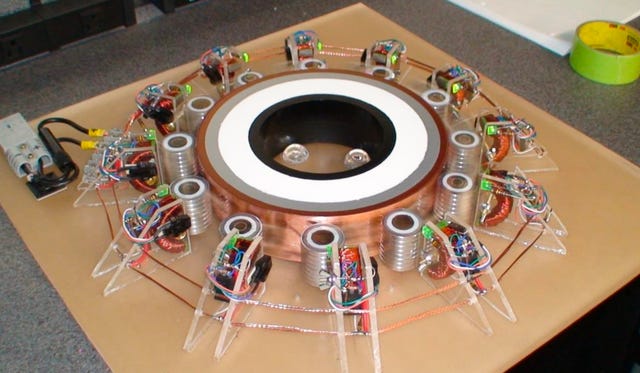
Photo on Steemit
In the ever-evolving landscape of scientific discovery, certain phenomena push the boundaries of conventional understanding, challenging established principles and inviting both intrigue and scepticism. One such phenomenon is the Searl Effect, a concept that has captivated the imaginations of many since its inception. Named after its creator, British inventor John Searl, the Searl Effect proposes the possibility of free energy and anti-gravity through a device known as the Searl Effect Generator (SEG). Despite its controversial nature, the SEG continues to inspire discussions about the limits of scientific knowledge and the potential for revolutionary advancements.
The Birth of the Searl Effect
John Searl, an enigmatic figure in the world of alternative science, first introduced the concept of the Searl Effect in the mid-20th century. Searl claimed that his invention, the SEG, could harness a unique form of magnetic energy to produce continuous electrical power without conventional fuel sources. As described by Searl, the SEG consists of a series of concentric rings and rollers meticulously magnetized to create a perpetual motion machine. According to Searl, this configuration generates free energy and exhibits anti-gravity properties, allowing the device to levitate and reduce its weight.
The Mechanics of the SEG
The Searl Effect Generator is designed with three primary components: the stator, the rollers, and the magnetic field. The stator, a large circular base, houses multiple rollers magnetized in a specific pattern. When the SEG is activated, the rollers move around the stator, supposedly generating a magnetic field that induces an electric current. This current, Searl claimed, could be harnessed to power electrical devices indefinitely.
Its purported ability to achieve perpetual motion sets the SEG apart from other energy generators. Searl asserted that once the SEG starts operating, it continues to function without any external input, effectively defying the laws of thermodynamics. Additionally, Searl suggested that the magnetic fields generated by the SEG could reduce the weight of objects, leading to anti-gravity effects and potential applications in transportation and space travel.
Scientific Scrutiny and Skepticism
Despite the bold claims surrounding the Searl Effect, the scientific community remains highly sceptical. The principles behind the SEG challenge fundamental laws of physics, particularly energy conservation. According to established scientific understanding, a perpetual motion machine is impossible, as it would violate the first and second laws of thermodynamics. These laws dictate that energy cannot be created or destroyed and that systems tend to move towards a state of entropy or disorder.
To date, there is no peer-reviewed evidence or independently verified data to support the existence of the Searl Effect. Numerous attempts to replicate the SEG have failed, and Searl's demonstrations have often been criticized for their lack of transparency and scientific rigour. Critics argue that the SEG, like many other perpetual motion machines, is based on flawed assumptions and wishful thinking rather than empirical evidence.
The Legacy of John Searl and the SEG
Despite the controversy, John Searl's work has left a lasting impact on alternative science and free energy research. The SEG continues to inspire a dedicated following, with enthusiasts and researchers exploring the potential of magnetic energy and anti-gravity technologies. Searl has become a cult figure, symbolizing the relentless pursuit of innovation and the quest to challenge conventional wisdom.
The story of the Searl Effect reminds us of the importance of scepticism and critical thinking in scientific inquiry. While the idea of free energy and anti-gravity is undeniably alluring, it is essential to approach such claims with a healthy dose of scrutiny and demand rigorous evidence. Like many other fringe scientific concepts, the Searl Effect occupies a space where imagination and reality intersect, offering both a cautionary tale and a source of inspiration for those who dare to dream beyond the boundaries of established knowledge.
In conclusion, the Searl Effect remains a fascinating and contentious topic within fringe science. While the claims of free energy and anti-gravity continue to captivate the imaginations of many, they also highlight the need for rigorous scientific validation and adherence to fundamental principles. Whether the SEG will ever be proven or remains a perpetual enigma, John Searl's legacy and audacious ideas will undoubtedly continue to spark curiosity and debate for generations to come.
As always, feel free to reach out with any questions or comments. Happy musing!