
Cognitive Dissonance: Why Our Minds Struggle with Contradiction
How conflicting thoughts and actions influence our choices and reshape our identities

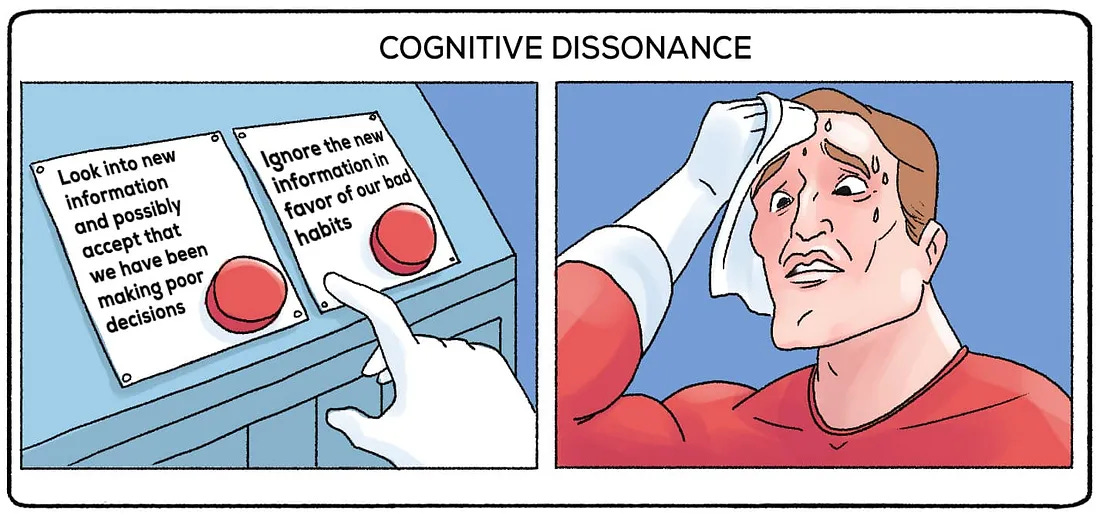
Image from Mind Talk
Every individual carries a silent conflict within. It arises not from external pressures but from the clash of their thoughts, beliefs, and actions. This internal conflict is known as cognitive dissonance. First introduced by psychologist Leon Festinger in the late 1950s, cognitive dissonance describes the psychological discomfort experienced when one’s beliefs are inconsistent with their actions or when one holds two contradictory beliefs simultaneously. It is this discomfort that often drives people to rationalise, justify, or change their thoughts or behaviours to restore mental harmony.
The Mechanics of Mental Conflict
At its core, cognitive dissonance is a matter of psychological equilibrium. Human beings strive for consistency. When they smoke cigarettes despite knowing the health risks, or when they splurge on luxury items while promoting financial prudence, a dissonance emerges. This tension is not trivial. It can influence decisions, shape identities, and even alter memories.
For example, a person who believes in environmental conservation but drives a fuel-inefficient vehicle might experience dissonance. To resolve this, they might downplay the harm caused by their vehicle or exaggerate their other environmentally friendly behaviours to compensate.
Common Examples in Everyday Life
Health and Lifestyle Choices
A person who values health but frequently consumes junk food is likely to experience dissonance. To reduce the discomfort, they might convince themselves that they exercise enough to offset the poor diet or that they deserve indulgence due to stress.Consumer Decisions
After making an expensive purchase, such as a smartphone, individuals may experience post-purchase dissonance. To mitigate regret, they often focus on the positive features of their choice and ignore the benefits of alternative options.Workplace Behaviour
Employees who view themselves as ethical but witness or participate in questionable workplace practices may struggle internally. They may justify their actions as being required for job security or shift blame to company culture.
Cognitive Dissonance in Social and Political Contexts
Dissonance also plays a powerful role in shaping societal behaviour. Voters who support a political candidate but disagree with some of the candidate’s views may minimise those conflicts to maintain a cohesive self-image as loyal supporters. Similarly, individuals may ignore inconvenient facts that contradict their worldview to avoid the discomfort of dissonance.
The power of this psychological mechanism is evident in debates around climate change, vaccination, and social justice, where people cling to beliefs that align with their identities, even when faced with contradictory evidence.
The Process of Dissonance Reduction
There are several ways individuals reduce cognitive dissonance:
Changing behaviour: A smoker might quit to align with the belief that smoking is harmful.
Changing beliefs: They might instead begin to doubt the evidence about smoking's dangers.
Adding consonant cognitions: They could justify their habit by saying it helps manage stress.
The chosen strategy depends on which path requires the least psychological effort while restoring a sense of internal consistency.
Implications for Personal Growth and Society
While cognitive dissonance can lead to denial or rationalisation, it also holds the growth potential. Recognising dissonance can push individuals to reevaluate values and adopt healthier, more coherent ways of living. At the societal level, understanding how dissonance works can inform approaches in education, public health, and conflict resolution.
For instance, campaigns that create a sense of dissonance in audiences — such as showing the contrast between self-image and harmful behaviour — can be more effective in changing attitudes than simply providing facts.
In conclusion, cognitive dissonance is more than a psychological term. It is a force that shapes the decisions, identities, and moral compasses of individuals. While it can lead to avoidance and self-justification, it also offers a pathway to self-awareness and transformation. By understanding this subtle yet powerful phenomenon, we can better navigate the contradictions within ourselves and cultivate a more authentic alignment between what we believe and how we live.
As always, feel free to reach out with any questions or comments. Happy musing!